

Harmenszoon
Rembrandt Harmenszoon van Rijn (1606–1669) was a Dutch master of painting, drawing, and printmaking, celebrated for his profound psychological insight and technical innovation. This bust-length portrait of a young man with flowing blond hair and a wide-brimmed hat captures a striking immediacy that draws the viewer in. A Dutch inscription on the verso identifies the sitter as Antonie Coopal (c.1606–1672).
In The Phases series, Otto Lundbladh engages with Rembrandt’s intimate realism, translating its depth of character into a contemporary dialogue about presence and perception. His reinterpretation transforms the quiet intensity of the sitter into a reflection on how individuality persists, even as identity becomes increasingly constructed and mediated.
Price: 300€ (shipping and framing are not included)
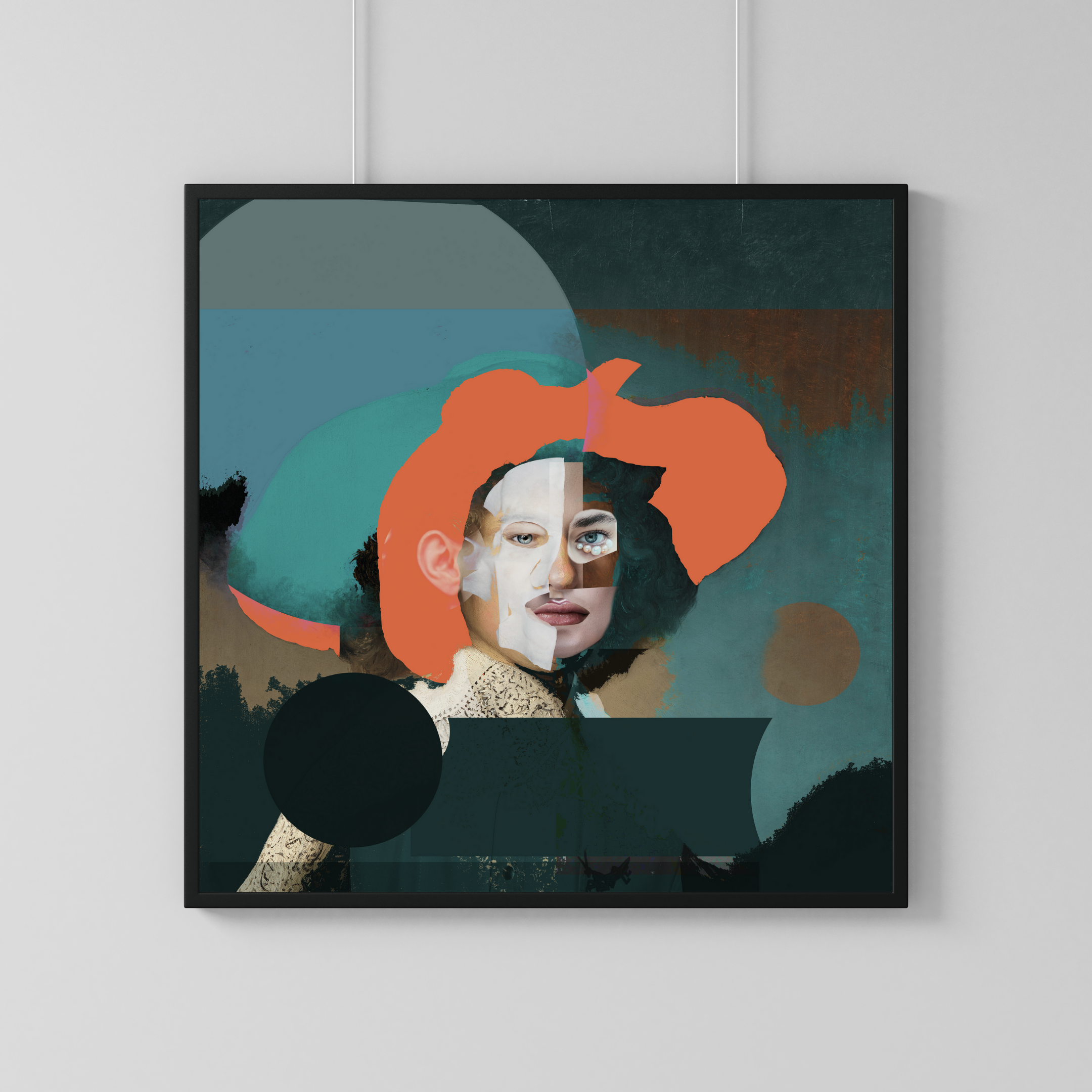
Rembrandt Harmenszoon van Rijn (1606–1669) was a Dutch master of painting, drawing, and printmaking, celebrated for his profound psychological insight and technical innovation. This bust-length portrait of a young man with flowing blond hair and a wide-brimmed hat captures a striking immediacy that draws the viewer in. A Dutch inscription on the verso identifies the sitter as Antonie Coopal (c.1606–1672).
In The Phases series, Otto Lundbladh engages with Rembrandt’s intimate realism, translating its depth of character into a contemporary dialogue about presence and perception. His reinterpretation transforms the quiet intensity of the sitter into a reflection on how individuality persists, even as identity becomes increasingly constructed and mediated.
Medium: Digital print on fine art paper
Size: 100 × 100cm
Edition: Edition of 150
Signature: Signed
-
Each motif is produced in a format of 100 × 100 cm, printed on a slightly larger sheet to facilitate professional handling and preservation.
The series is strictly limited to 150 editions per motif.
As framing services are not currently offered, all motifs are delivered unframed.
Each motif is personally signed by Otto Lundbladh. Every artwork is accompanied by a certificate of authenticity and a thumb print signature, guaranteeing its provenance and individuality.
-
Harmenszoon is part of Otto Lundbladh’s eight-part edition series, The Phases Series.
The series explores the art of self-obsession through a timeless lens. By reimagining old master portraits with digital tools, these works transform classical imagery into contemporary reflections on our culture of self-representation. Portraits, selfies, mirrors, the tools may change, but the fascination with the self endures.
-
The Phases series is produced using the Giclée method, a fine art inkjet process named from the French “to spray.” This technique delivers exceptional color accuracy and detail.
Each motif is made on Rauch Fine Art 310g paper, a natural white, acid-free medium renowned for its vivid tones, neutral balance, and archival longevity.